The excitement of RC flying

A love of flying is contagious.  I got it from my dad.  He was a crew chief in the US Marine Corps during World War II, island hopping through the pacific.  There were times that he would drive my brother and I to the airport, just to watch planes take off and land.

While flying a great variety of full size planes and jets would be great, for most of us, that’s beyond practicality.  And, for that matter, flying in the plane itself could be a bit dangerous for some of us – “didn’t you check the fuel!!??”

Radio controlled model aircraft give you the opportunity to experience the joys and challenges of flying at a budget that you can afford, while keeping your feet safely on the ground!  That’s not to say that some people don’t spend an astronomical amount of money on their planes.  The sky is the limit.  But whether your limit is a few hundred dollars or tens of thousands, you can find a way to get a plane up in the air that you control.
Getting started with radio controlled flying

What you shouldn’t do, is what my boys and I did 30 years ago or so.  Initially we learned how to crash control line planes.  Then we progressed to learning how to crash radio-controlled planes.  Our approach was to go to an empty field somewhere with a plane or two, fly until nothing would fly anymore, then go home and fix them to again fly, and repeat.  At no point did we have anyone who knew what they were doing with us to teach us.  While we eventually learned, it wasn’t the best way to do it.

Fortunately, after having a twenty-year break, when I got back into it, I joined a club that not only provided instruction, but insisted that any new member develop a certain level of competency before being allowed to fly on their own.  That didn’t cost anything extra, and it went pretty quick for me, but it was well worthwhile.  In my case it helped develop some necessary discipline.  No longer was the approach to zing up in the air squirrel around without any particular plan, or even necessarily knowing where  the plane was going, and then just try to recover and bring it down safely.

So, find yourself a radio-controlled flying club near you, make an enquiry, and get out to the field to meet some of the club members and see what’s going on.  At our club we even offer a new person the opportunity to fly one of our planes with an instructor, to get a feel for it before they join.

Also, have a look at the training program that we have developed: Flight Training

Buying and building radio controlled planes

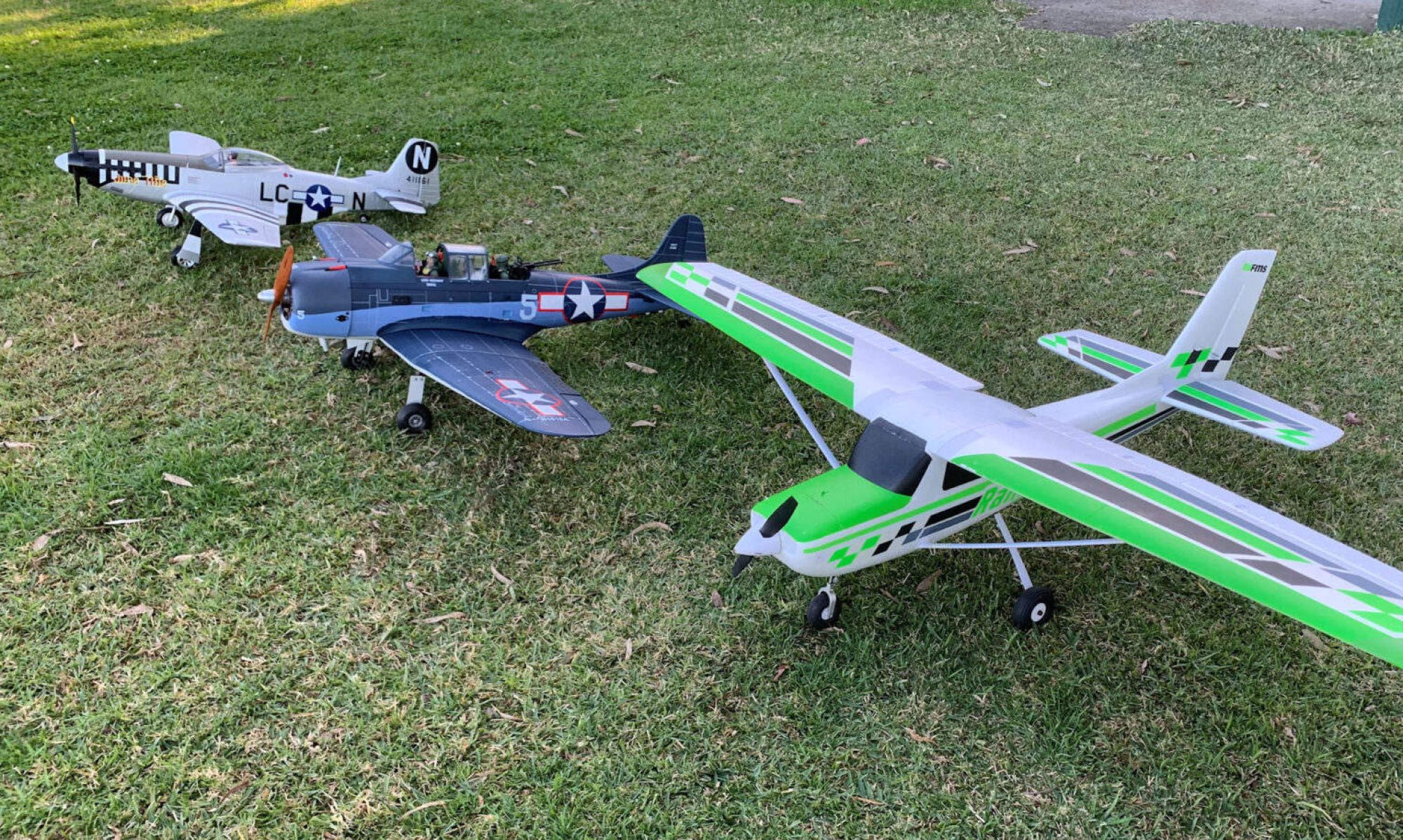
If you are just getting started, the best approach is to first find the club you want to be a part of, then ask them what plane and radio you should begin with.  At our club that will often be a FMS 1800 Ranger with a Spektrum radio.  The Ranger is a large plane that can fly slow, and it has great handling characteristics.  Being a foam plane, it’s also easier to fix than a ply and balsa model.  The Spektrum radio is simply based on what radio the instructor is using.  Your radio will be linked up to the instructor’s so that he or she can take over control whenever that is needed.  That should greatly minimize the likelihood of a crash early on.

Should you be on a tight budget, you might get started with something like a Hobbyking Bixler.  It’s a glider with a motor on top.  It doesn’t have landing gear, so you will need to either hand launch or use a drop off cradle with wheels on it, but it’s fine to do a belly landing on the grass.  It’s also reasonably large to help you see what’s going on, and it can fly slow.

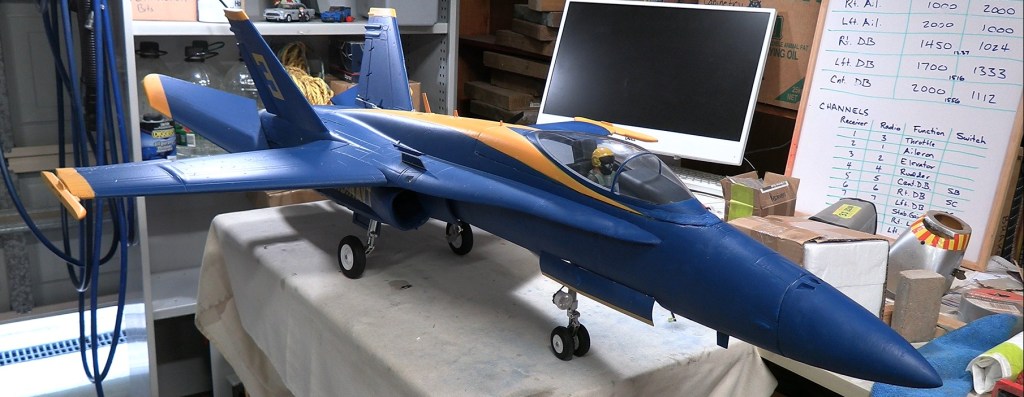
Of course there are many options, but just don’t go out and buy a really cool warbird or ducted fan jet.  That can come in time, but not to get started with! In your selection, there is also the matter of whether to go with electric, glow fuel or gasoline power.

Crashing and fixing RC planes

I need to let you know up front that even the best RC flyers will crash a plane from time to time.  It might be a radio or airframe failure, or just trying something new and daring.  So, don’t be devastated when it happens to you.  It’s not what you want, but learn from it and see it as an opportunity.  On our YouTube channel you will see a number of videos where I am fixing a plane that I have crashed:

Yes, it happens to me too!  More times than I would like to admit.  But I do my best to have a positive attitude about the whole thing, and I really do get a great feeling when I have restored a broken plane to be something beautiful.  It reminds me of what God has done for me!  See the “About” page if you want to know more about that.

By the way, if you really don’t like fixing planes, you will find that there are a variety of planes that you can fly very confidently without much risk of crashing.  You just need to know what you are comfortable with, and stick to that sort of plane.

Who is RC Jim?

Jim is a very ordinary radio-controlled aircraft enthusiast.  He’s certainly not the world’s greatest flyer, and he has been known to do some dumb things on occasion.  But he has a passion for learning and loves to share that with others.  And he is constantly working on avoiding the mistakes.  In many cases, what he has learned can help you to keep from making the same mistake.  And, certainly, it has given him a lot of experience in fixing things.

As a former automotive engineer, and having flown full size aircraft, RC Jim also has insights that can be very helpful.  He loves to come up with clever ways of doing construction and repairs, and with the flying, he likes to share an understanding of what’s actually happening with the plane.

Part of Jim’s background involves being a pastor of a church.  He has now retired, but all of that was motivated by a love for God and for people.  Caring for others and sharing things that can be helpful to them is part of his DNA.  See more in the “About” section.