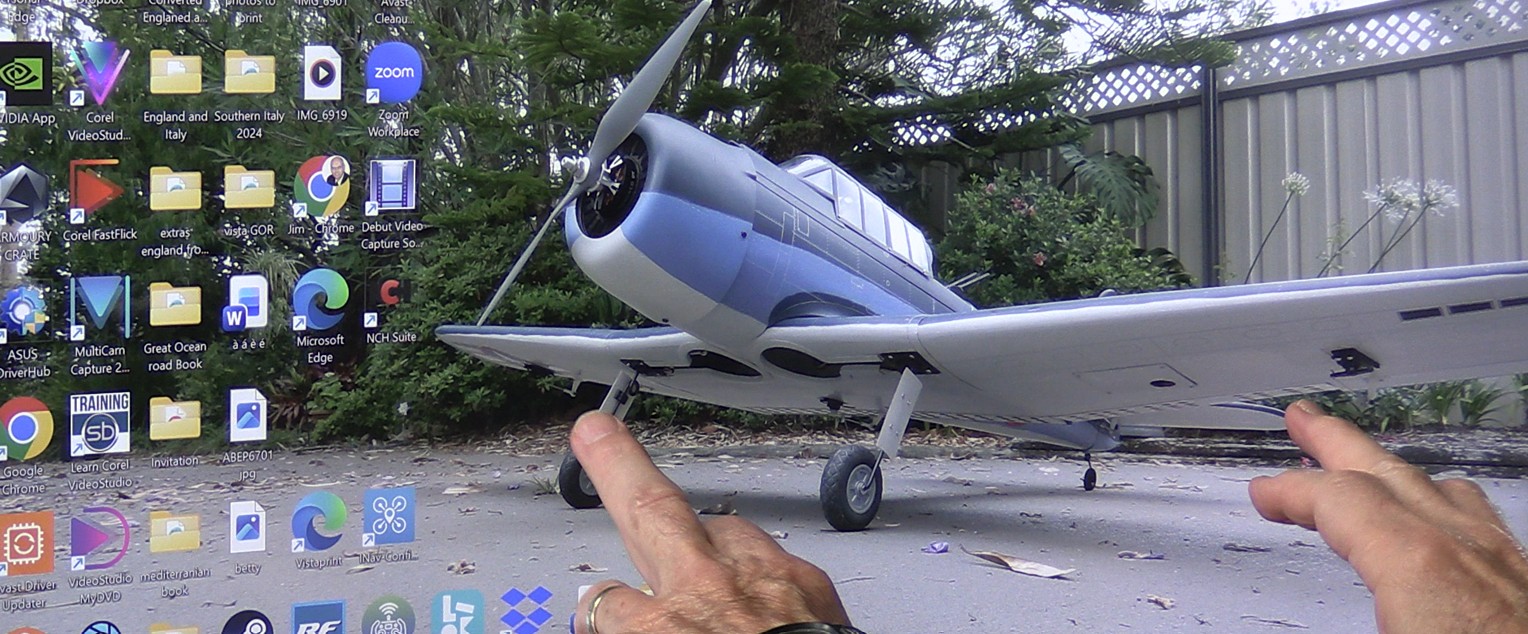
Most of our planes are going to just need the simple flight controls and perhaps flaps and/or landing gear. That’s pretty easy to do. But recently I repaired my VQ SBD Dauntless dive bomber, and went through the setup routine again. It is complex.
Not only does it have dive flaps on the wings and a centre flap under the fuselage, but the servo placement can mean that the rates and end points may need to be different for each of them. It has the old style retracts that use a separate servo. There wasn’t a place for one centrally located servo to operate both, so each were given their own servo. Their placement meant that one operated in reverse of the other one. Generally I like to have the ailerons on separate channels to maximise adjustment options. In all that meant that I needed ten channels with a lot of mixing.
To make matters a touch more critical, the dive flaps out on the wings were slightly warped, and to hold them straight and fully shut it took a lot of pressure. That meant that the servo arm needed to be pointed directly at the flap control arms when the flaps were closed. That maximised the closing force and positioned the servo arm such that the servos didn’t need to be providing torque to keep the flaps held tightly closed.
Two receivers needed
On top of all that, I didn’t have an ELRS receiver with ten or more channels. So, I needed to use two receivers in the plane to achieve that.
Here is a YouTube video going through the steps of setting this up.
And, here is the document that we used to guide what we did:

